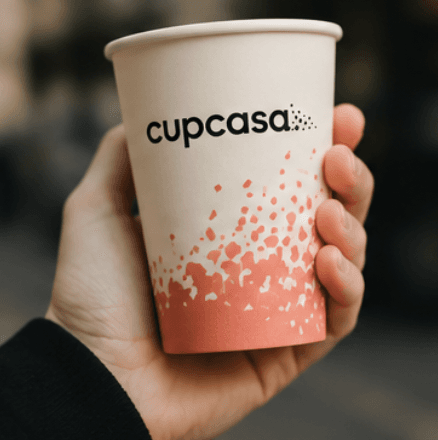
You’re holding a cup
made to disappear.
No PE. No PLA. No microplastics. It’s a paper cup lined with PHA, a material microbes make from plants, and it’s certified to compost right in a backyard bin.
Made for every drink. Made to disappear.
Compost it. Seriously.
Here’s where this cup should go, best option first. Lid included.
- Best
1. Home compost
Toss it in — lid, cup and all. The cup is certified to break down in a backyard compost, no industrial facility needed, and the lid is moulded from sugarcane fibre — fully organic material that composts.
- Check first
2. Green bin / organics
Don't assume. Many organics programmes take food scraps and soiled paper only, and pull compostable containers out at the sorting line — the CRD's on southern Vancouver Island is one. Check your own city's list first.
- Last resort
3. Garbage, if you must
It still won't outlive you like a plastic-lined cup. But compost is where it's designed to go.
Not the blue bin. Cups contaminate paper recycling, this one included.
Nature made it. Nature takes it back.
PHA is what certain microbes make to store energy, the way we store fat. We grow it from plant oils, shape it into a cup, and when you’re done the same kind of microbes eat it again.
- 1 · Grown
Microbes turn plant oils into PHA
- 2 · Made
Formed into a PHA-lined cup
- 3 · Used
Hot or cold, with your sleeve on it
- 4 · Returns
Microbes eat it back into soil
Why this one’s different.
Regular paper cup
Polyethylene (PE) plastic lining
- Home compost
- Industrial compost
- No microplastics left behind
Ends up in landfill — the plastic film makes it hard to recycle or compost.
“Compostable” PLA cup
Corn-plastic (PLA) lining
- Home compost
- Industrial compost
- No microplastics left behind
Only breaks down in hot industrial composters, which most places don’t have.
This cup (PHA)
Paper with a PHA lining — no PE, no PLA
- Home compost
- Industrial compost
- No microplastics left behind
Certified home compostable by TÜV Rheinland. Microbes eat the lining; nothing plastic is left.
Certified home compostable by TÜV Rheinland. Certifications available on request.
Questions people ask
What is PHA?
Polyhydroxyalkanoate. It's a material that microbes naturally make and store as energy, produced today by fermenting plant oils. Because it's something nature already makes, nature already knows how to take it apart.
Is it safe to drink from?
Yes. It’s food-safe. The lining is PHA, not polyethylene or PLA, so there’s no conventional plastic in contact with your drink.
Can I put it in the recycling instead?
Please don't. Cups of any kind contaminate paper recycling. Compost or green bin is the right home for this one.
How long does it take to break down?
Certified home-compost conditions: months, not centuries. Exact time depends on heat, moisture and how active your compost is.
Why do you say “certified”?
TÜV Rheinland, an independent certifier, tested the cup and certified it home compostable. The PHA lining material is certified too. We only claim what’s been tested, and we’ll send the certifications to anyone who asks.
Can I get these for my café?
Yes. Cups are sold by the case of 1,000, and wholesale pricing is available for volume.
Like the cup?
Tell your café.
Every café that switches keeps thousands of plastic-lined cups out of landfill a year. If you run one, your first hundred are on us.
Follow the cup
Occasional updates on where cupcasa cups turn up next. No spam.
Thanks for scanning. Now go enjoy your drink. Read the certification →